

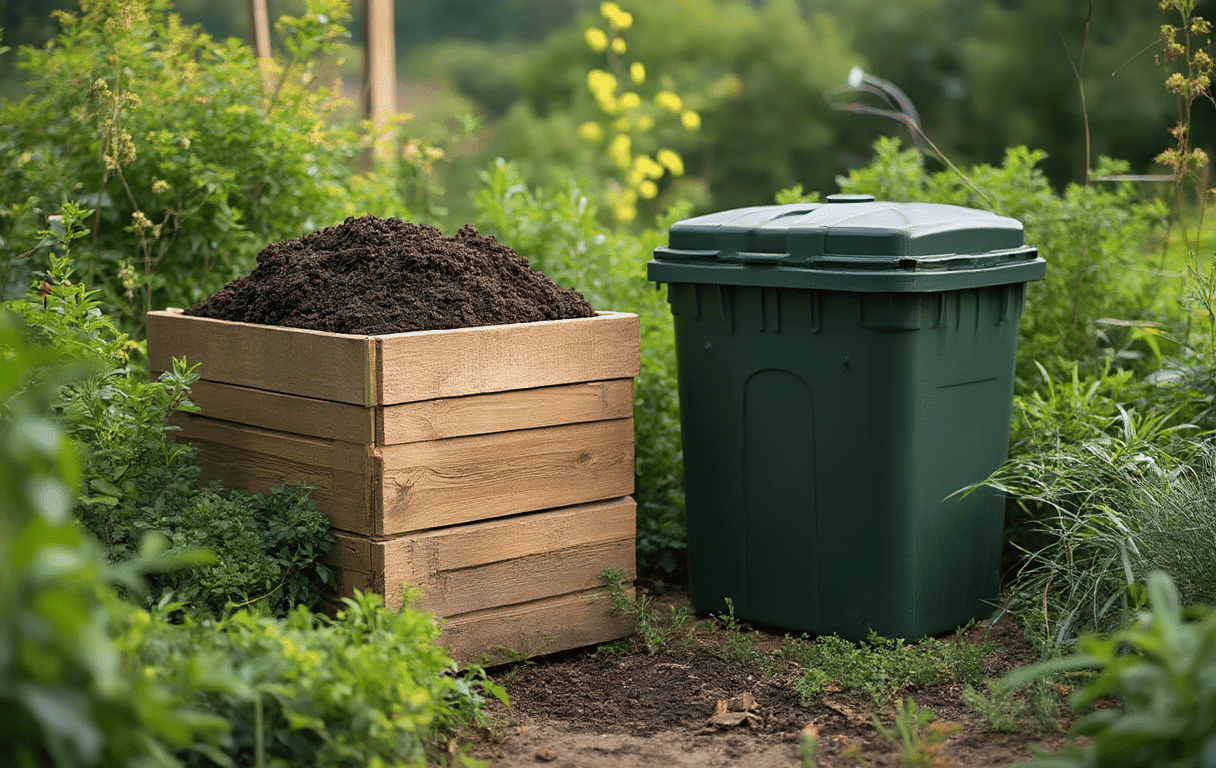
Want to transform your organic waste efficiently?
Many miss out on the perfect composting solution due to overwhelming choices and suboptimal designs.
Don’t make that mistake.
Explore top compost bins and make composting a breeze!
Best Compost Bins

PRADICHI 300L Garden Compost Bin – Outdoor Composting Container for Kitchen & Garden Waste – Durable, Weatherproof, UV-Protected & BPA-Free Plastic (Black/Green)
- 🌱 𝟯𝟬𝟬𝗟 𝗟𝗮𝗿𝗴𝗲 𝗖𝗮𝗽𝗮𝗰𝗶𝘁𝘆 𝗖𝗼𝗺𝗽𝗼𝘀𝘁 𝗕𝗶𝗻 – Perfect for gardens, patios, and backyards, this spacious compost converter transforms kitchen scraps and garden waste into nutrient-rich compost. An eco-friendly choice for sustainable gardening.
- ⚡ 𝗤𝘂𝗶𝗰𝗸 & 𝗘𝗮𝘀𝘆 𝗔𝘀𝘀𝗲𝗺𝗯𝗹𝘆 – No tools required! Assemble this outdoor compost bin in minutes. Features a wide 40 cm top hatch for easy loading of food waste, grass clippings, and leaves, plus a bottom access door for hassle-free compost remov
- ♻️ 𝗦𝗮𝗳𝗲 & 𝗘𝗰𝗼-𝗙𝗿𝗶𝗲𝗻𝗱𝗹𝘆 𝗗𝗲𝘀𝗶𝗴𝗻 – Built from BPA-free, food-safe plastic with UV protection, this compost bin is fully recyclable, durable, and designed to withstand outdoor weather conditions.
- 💨 𝗙𝗮𝘀𝘁𝗲𝗿 𝗖𝗼𝗺𝗽𝗼𝘀𝘁𝗶𝗻𝗴 𝘄𝗶𝘁𝗵 𝗩𝗲𝗻𝘁𝗶𝗹𝗮𝘁𝗶𝗼𝗻 – Multiple air vents on all sides allow optimal oxygen flow, speeding up aerobic decomposition and delivering usable compost in less time.
- 🌦️ 𝗗𝘂𝗿𝗮𝗯𝗹𝗲 & 𝗪𝗲𝗮𝘁𝗵𝗲𝗿𝗽𝗿𝗼𝗼𝗳 𝗖𝗼𝗻𝘀𝘁𝗿𝘂𝗰𝘁𝗶𝗼𝗻 – Made to last year-round, this robust composting container resists rain, sun, and wear. Compact size (81 × 60 × 60 cm) fits neatly in gardens, balconies, and terraces while offering generous capacity.
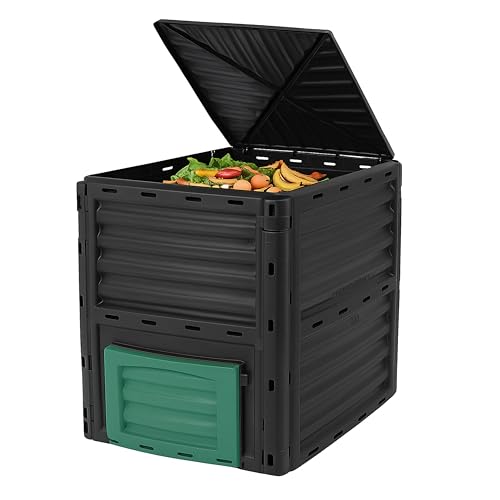
DIVCHI 300L Garden Compost Bin – Outdoor Composting Container for Kitchen & Garden Waste – Eco-Friendly, Durable & Waterproo, UV-Protected, BPA-Free Plastic (Black Green)
- 300L Large Capacity Compost Bin – This high-volume compost bin is perfect for gardens, outdoor spaces, and backyards. The DIVCHI compost converter efficiently transforms kitchen and garden waste into nutrient-rich compost. Ideal for eco-conscious homes and sustainable gardening practices.
- Quick and Easy Assembly Composter – Assemble this outdoor composter in minutes with no tools required. The top-loading compost bin features a wide 40 cm hatch for easy input of food waste, leaves, and grass clippings, while the bottom access door allows effortless compost collection.
- Eco-Friendly and BPA-Free Compost Converter – Made from UV-protected, BPA-free, food-safe plastic, this compost bin is designed to handle tough outdoor conditions. Durable, weather-resistant, and fully recyclable, it supports safe and sustainable composting at home.
- Effective Ventilation for Faster Composting – Designed with multiple air vents on all sides, this home composter ensures optimal oxygen flow for faster aerobic decomposition. Produce usable compost in less time with this high-efficiency compost bin.
- Weatherproof and Durable Composting Bin – The robust, waterproof construction is built to last all year round. With dimensions of 81 × 60 × 60 cm, this compact compost converter fits neatly in gardens, balconies, and terraces while offering generous composting capacity.

4smile 300 Litre Garden Composter Bin Composting Waste Box Recycling Eco Storage, Plastic, Black
- Easy to fit, approximately 300litres capacity, size without base: 83 x 61 x 61 cm
- The composter can be filled from top in a user-friendly way. The dark colour in sunny weather ensures optimum heat inside.
- The ventilation holes provide for adequate air intake and, thus for an optimal bacterial effect.
- The garden composter is perfect for garden waste (such as leaves, dry grass, smoking wood, chips, hedge-sections and up to 1 year old plants) or kitchen waste (such as all fruit and vegetable waste, coffee grounds and filters, tea bag, duck egg, potted and cut flowers.)

Sakusei Tools SAKUSEI 300 Litre Outdoor Garden Compost Waste Bin 300L Eco Friendly Composter Waste Converter Bin, Black and Green (SAKGB300)
- 1. Eco-Friendly Waste Reduction Transform everyday kitchen and garden waste into nutrient-rich compost. Perfect for fruit and vegetable scraps, coffee grounds, yard trimmings, dried leaves, and more — helping you reduce landfill waste and live greener.
- 2. Large 300L / 80-Gallon Capacity Designed for households and gardens of all sizes, the spacious 300-liter body provides ample room for continuous composting. The wide top opening makes loading easy, while the lower hatch allows simple access to finished compost.
- 3. Durable, Weather-Resistant Construction Made from heavy-duty, BPA-free, recycled PP plastic, this bin is built to withstand sun, rain, snow, and temperature changes. The thick, ribbed panels add strength, stability, and long-lasting durability.
- 4. Fast & Efficient Composting Optimized for high-performance composting — the dark panels absorb heat to speed up decomposition, while the well-designed structure helps maintain ideal moisture levels to produce rich compost in as little as 4–6 weeks.
- 5. Advanced Aeration System Built-in ventilation openings on all sides promote superior airflow. Maximum oxygen circulation boosts microbial activity for faster, more efficient composting compared to closed-off or single-vent designs.

Addis 518251 Kitchen Compost Caddy 4.5 Litre, Polypropylene, Metallic Silver
- Ideal 4. 5 litre capacity for everyday kitchen use
- Can also be used as a cleaning or storage caddy
- Hard wearing quality finish, Easy to wipe clean
- Dimensions w25 x d18 x h19cm (10" x 7" x 7. 5 inches)
- Made in the UK with 10 year Addis guarantee
Checklist: What makes a great Compost Bins
- Material: Choose compost bins made from durable and weather-resistant materials such as BPA-free plastic, metal, or sustainable wood. These materials ensure longevity and can withstand the varying UK climate conditions.
- Capacity: Consider the size of your garden and the amount of organic waste you produce. Small gardens might benefit from a 200-litre bin, while larger spaces could require compost bins with over 500 litres capacity. Choosing the right composting solution is crucial for efficient waste management.
- Ventilation: Proper airflow is crucial for efficient composting. Look for compost bins with adequate ventilation slots or systems to ensure proper aeration, which improves decomposition rates and reduces odours. Using appropriate garden tools can also aid in maintaining your compost pile.
- Access: Ensure the compost bin has easy access points for both adding waste and removing finished compost. Features like removable doors or hinged lids can make turning and accessing the compost more convenient.
- Pest Control: A well-designed compost bin should prevent unwanted pests. Look for tightly fitting lids and secure construction to deter rodents and other animals while allowing beneficial organisms inside.
FAQ
What are the best materials for compost bins?
Durable and weather-resistant materials like BPA-free plastic, metal, or sustainable wood are ideal, ensuring longevity and suitability for varying UK climate conditions.
How do I choose the right capacity for a compost bin?
Consider your garden size and waste production; small gardens may need a 200-litre bin, while larger areas might require over 500 litres.
How can I ensure proper ventilation in a compost bin?
Select compost bins with adequate ventilation slots or systems to promote airflow, essential for efficient decomposition and odour reduction.